ENC · Expert Network Collaboration Platform

Decluttering expert
sourcing to cut
time-to-match.

-50%Expert search time
+40%Completed calls
Role
UX/UI & Product Designer
Scope
Discovery · UX Research · Workflow Architecture · Interaction Design
Product
B2B Expert Network Platform
Stage
0 → 1 productization of an existing service

Context

From a service business to a product opportunity

Right Angle was already connecting companies with specialists, but much of the process relied on email, calendars, and manual coordination. ENC aimed to turn that service model into a platform that Right Angle and other expert networks could use to manage sourcing, candidates, communication, and scheduling in one place.

The challenge was turning a workflow that worked through human coordination into a product that could work beyond one company.

Opportunity

The workflow already existed. The product didn’t.

The team already understood expert sourcing in practice: clients submitted a need, networks proposed specialists, coordinated availability, and arranged consultations. The challenge was not only finding experts, but keeping the whole process moving without adding more coordination.

Existing friction

Scattered communication

Project context was spread across emails and direct conversations.

Manual coordination

Networks tracked requests, candidates, feedback, and next actions manually.

Difficult comparison

Clients could receive several experts, but comparing them consistently took extra effort.

Scheduling overhead

Finding the right expert still left another round of availability and call coordination.

Business consequence

Every coordination step increased the distance between the client’s question and the expert conversation they actually needed.

Product Challenges

Productize the service, not copy it

Right Angle’s workflow gave us a strong starting point, but copying every internal habit would have created a tool optimized for one company.

Enter an existing market

Expert-network platforms already existed, so ENC had to fit familiar workflows while making sourcing and coordination meaningfully easier.

Keep flexibility without returning to email

The platform needed enough structure to clarify the process without making every sourcing project rigid.

Support an ecosystem, not one expert network

ENC needed to support clients working with several expert networks while keeping communication, candidates, and status understandable.

Learning from the service

Search was only one part of the problem

Sourcing continued through submissions, comparison, coordination, and scheduling.

Implication

Design the full sourcing lifecycle, not only search.

Email was flexible, but context was fragmented

Project information lived across messages, calendars, and candidate lists.

Implication

Make the project the shared context for communication and decisions.

Visibility affected decision speed

Clients needed to understand candidate differences, status, and next actions quickly.

Implication

Turn expert sourcing into a visible decision process, not a chain of messages.

Product Strategy

Turn the service workflow into a product model

Beneath the manual process, a common lifecycle emerged. This became the backbone of ENC, giving each feature a clear place in the workflow.

Stage 01

Create

Define the request

Stage 02

Source

Engage networks

Stage 03

Submit

Propose experts

Stage 04

Compare

Evaluate options

Stage 05

Schedule

Reach consultation

Key decisions

01

Make the project the shared object

Context was scattered across email, candidate lists, conversations, and calendars.

BeforeEmail + Lists + Calendar
Project
AfterShared context
Centralized
Email + Lists + CalendarBefore
Project
Shared contextAfter
Centralized
02

Design for multiple expert networks from the start

The product needed to work beyond one company and support several networks around the same request.

BeforeOne internal workflow
Project
AfterMulti-network structure
Multi-network
One internal workflowBefore
Project
Multi-network structureAfter
Multi-network
03

Turn expert submissions into a decision workflow

Receiving candidates was not enough; users needed to review, compare, and narrow down options.

BeforeProfiles
FiltersCompare
AfterShortlist
Structured
ProfilesBefore
Filters
Compare
ShortlistAfter
Structured
04

Treat scheduling as part of sourcing

Selecting the expert was not the end of the workflow.

BeforeSelection
AvailabilitySchedule
AfterConsultation
Connected
SelectionBefore
Availability
Schedule
ConsultationAfter
Connected

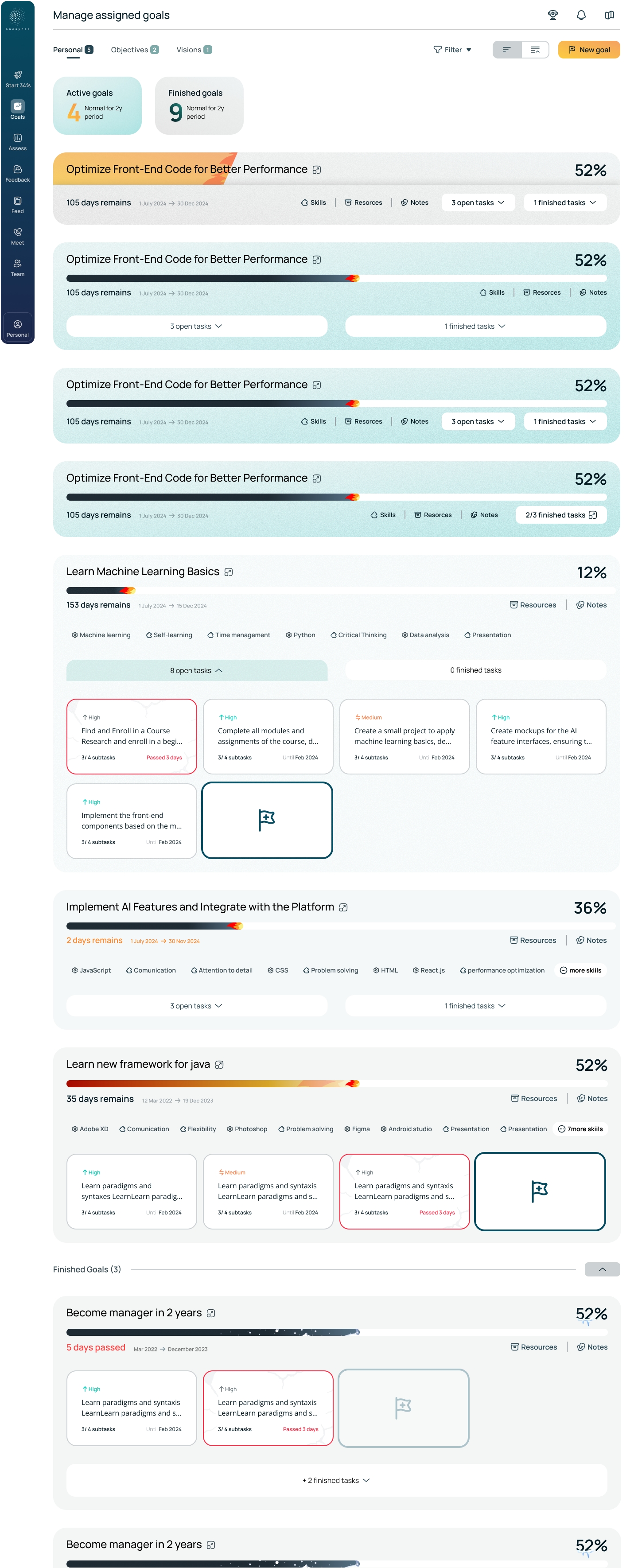
Solution Walkthrough

Impact

-50%
Expert search time

Structured sourcing and comparison cut the time needed to reach relevant experts.

+40%
Completed calls

Connecting selection and scheduling helped more projects reach an expert conversation.

+30%
Collaboration efficiency

Shared project context reduced coordination between clients and expert networks.

Clearer
Multi-party workflow

Multiple teams could work from the same project context.

Reflection

What I would push further

  1. 01Stronger expert comparison
  2. 02Better cross-network visibility
  3. 03Reduce external coordination

Learnings

  • The real problem was coordination, not search. Improving discovery alone would not solve the full sourcing workflow.
  • Productizing a service means defining reusable rules. The platform needed structure without losing the flexibility of the manual process.
  • Success was the conversation, not the search result. The workflow had to carry users from expert discovery through scheduling to an actual consultation.

Check other cases